
Under Spaghetti Junction
A Visit to the Underworld

You won’t find ‘Spaghetti Junction’ on a map. But if you live in the UK you may know it as the brutal concrete and complex motorway junction on the M6 at Gravelly Hill. It appears in the Guinness Book of World Records, as "the most complex interchange on the British road system". Built in the 1970’s it's was the centrepiece of the Midland Links project, which was designed to join up the M1, M5 and M6 motorways, as well as the A38(M) Aston Expressway. I visited there yesterday.
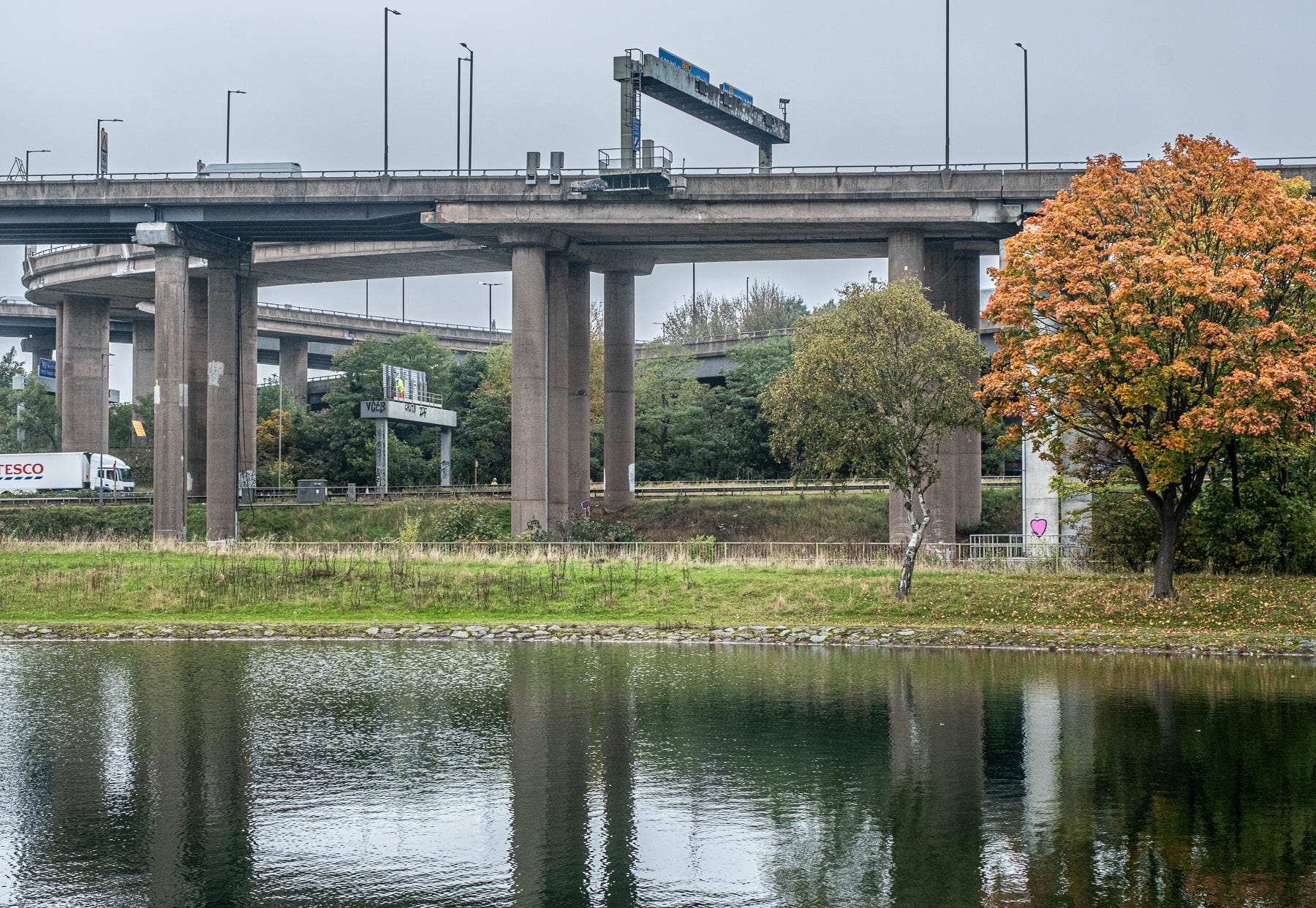
This is about as scenic as it gets (above)
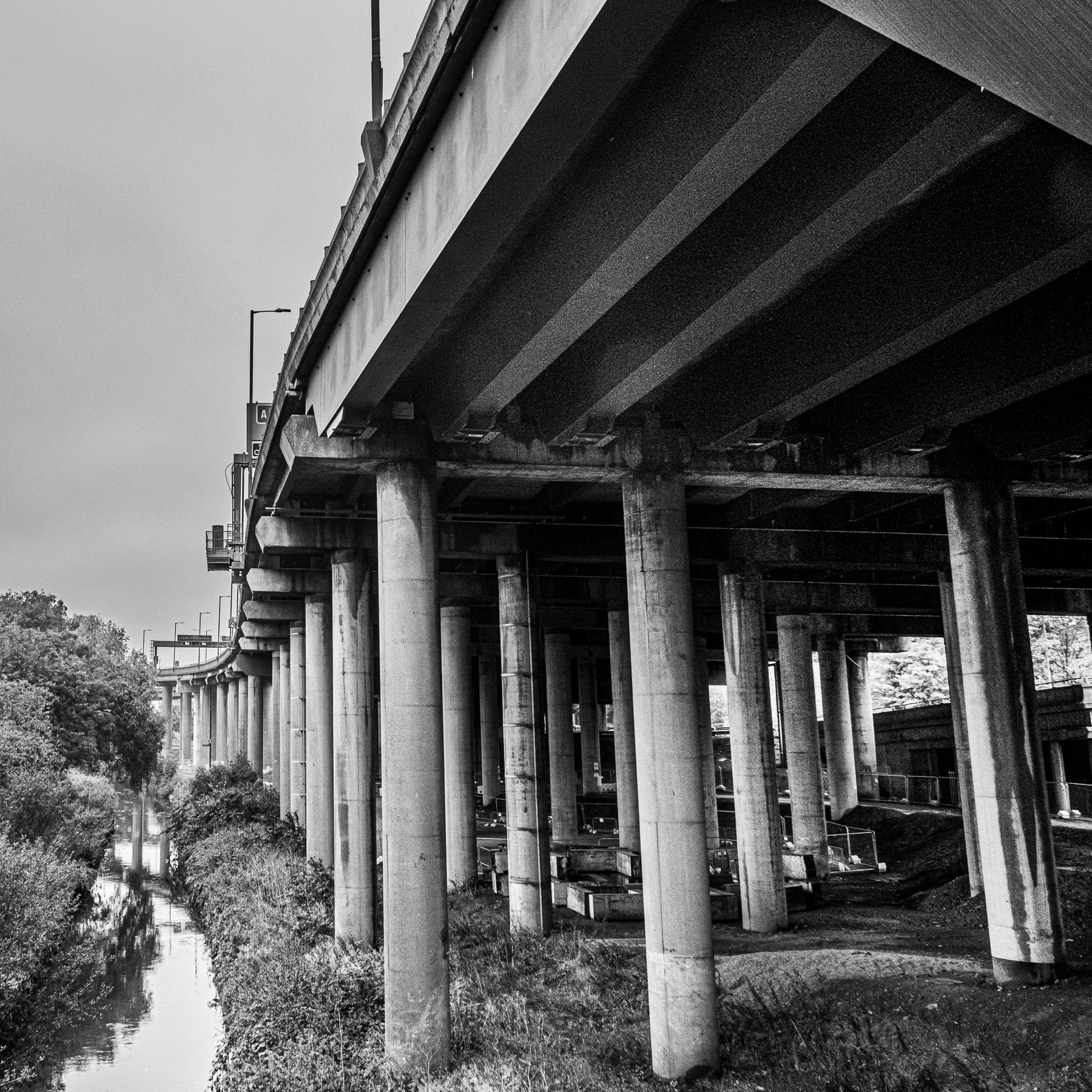
The reality below is stark and harsh
What most people don’t know is that there is a whole underworld underneath this massive structure. It is the point where three canals come together; the Birmingham and Fazeley, the Tame Valley and the Birmingham and Warwick Junction canals. Flowing alongside them is the River Tame. This underworld has numerous bridges criss-crossing the canal much of the area is covered is graffiti.
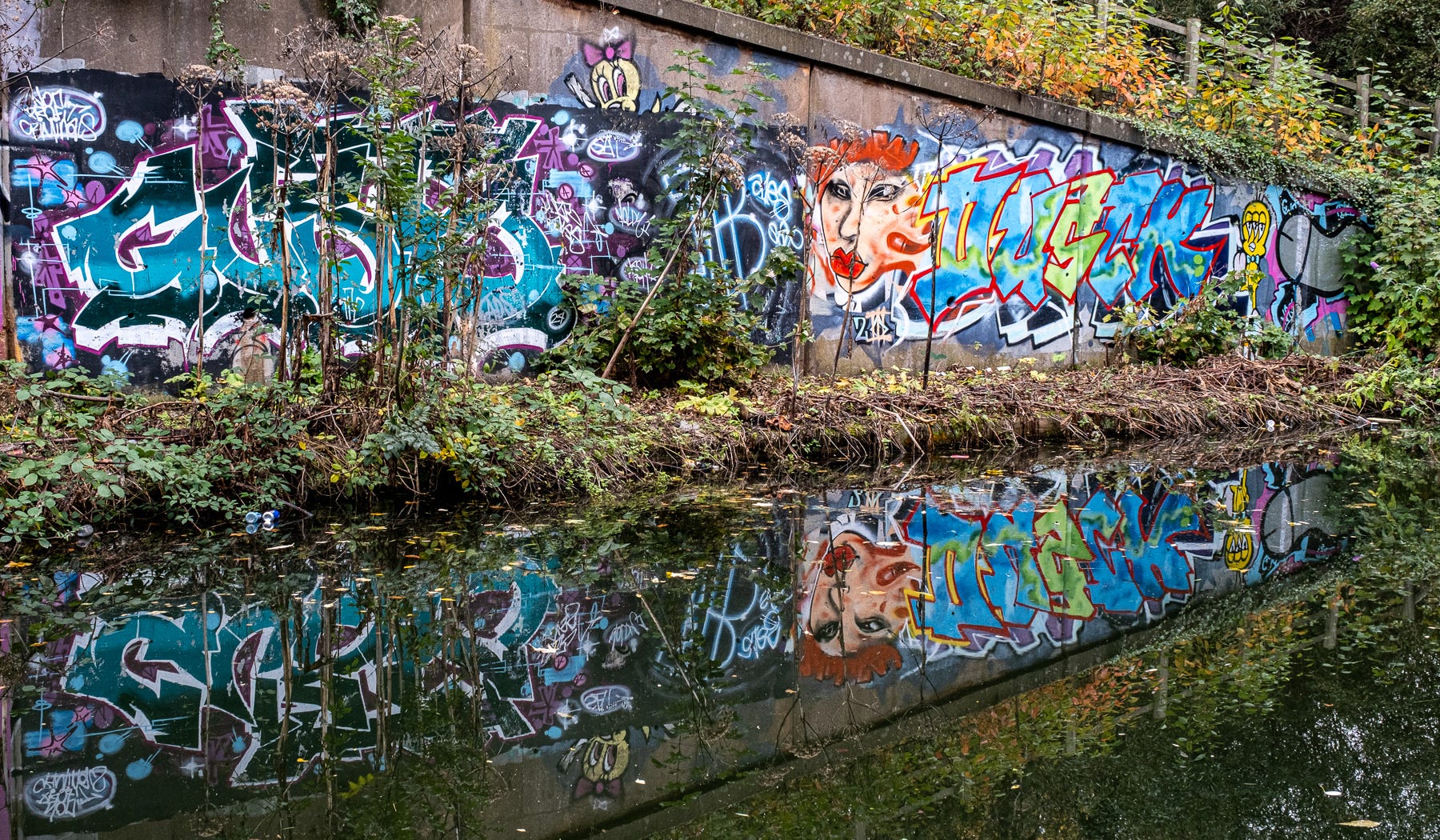
It feels slightly menacing down here, it probably is at night I would imagine.
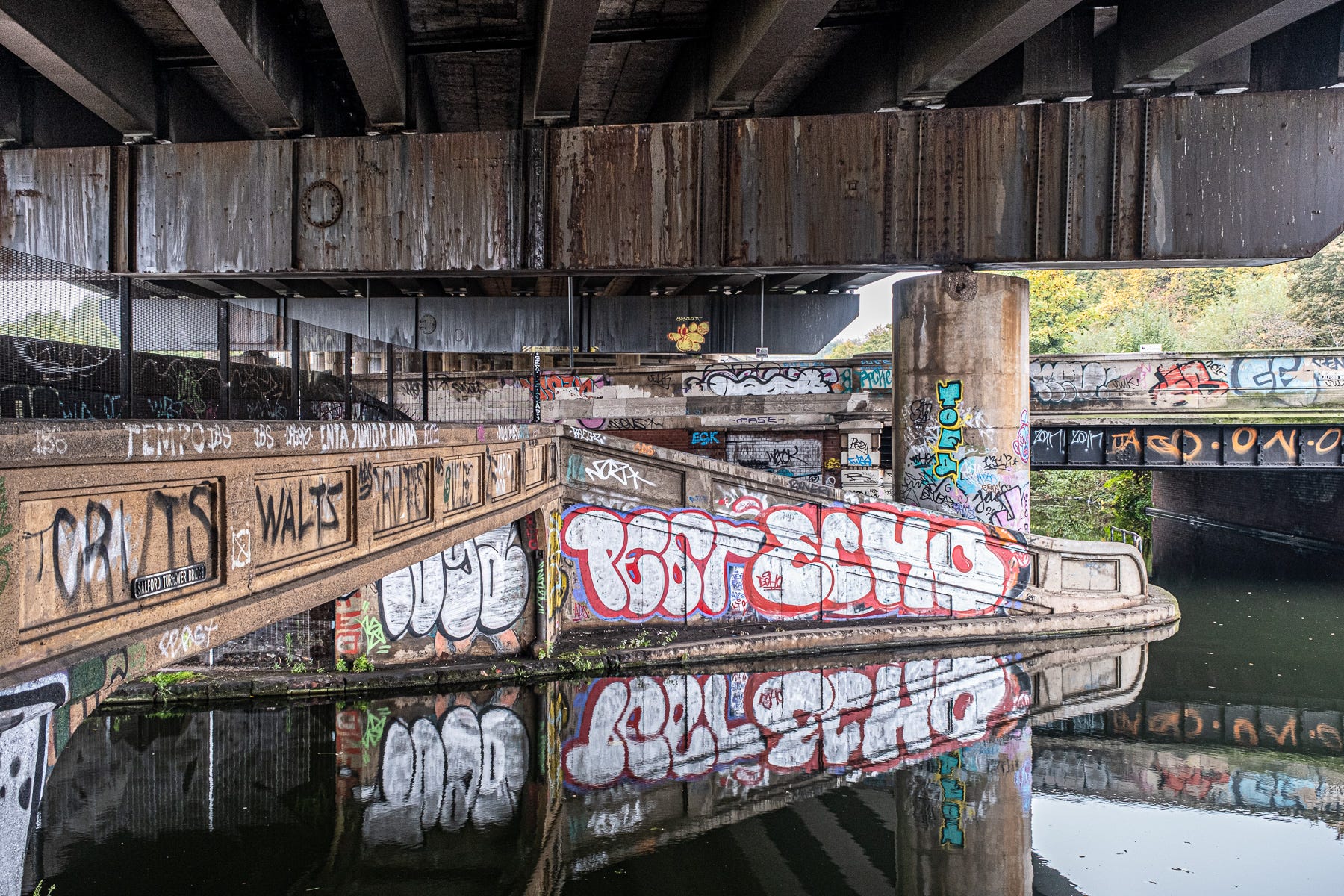
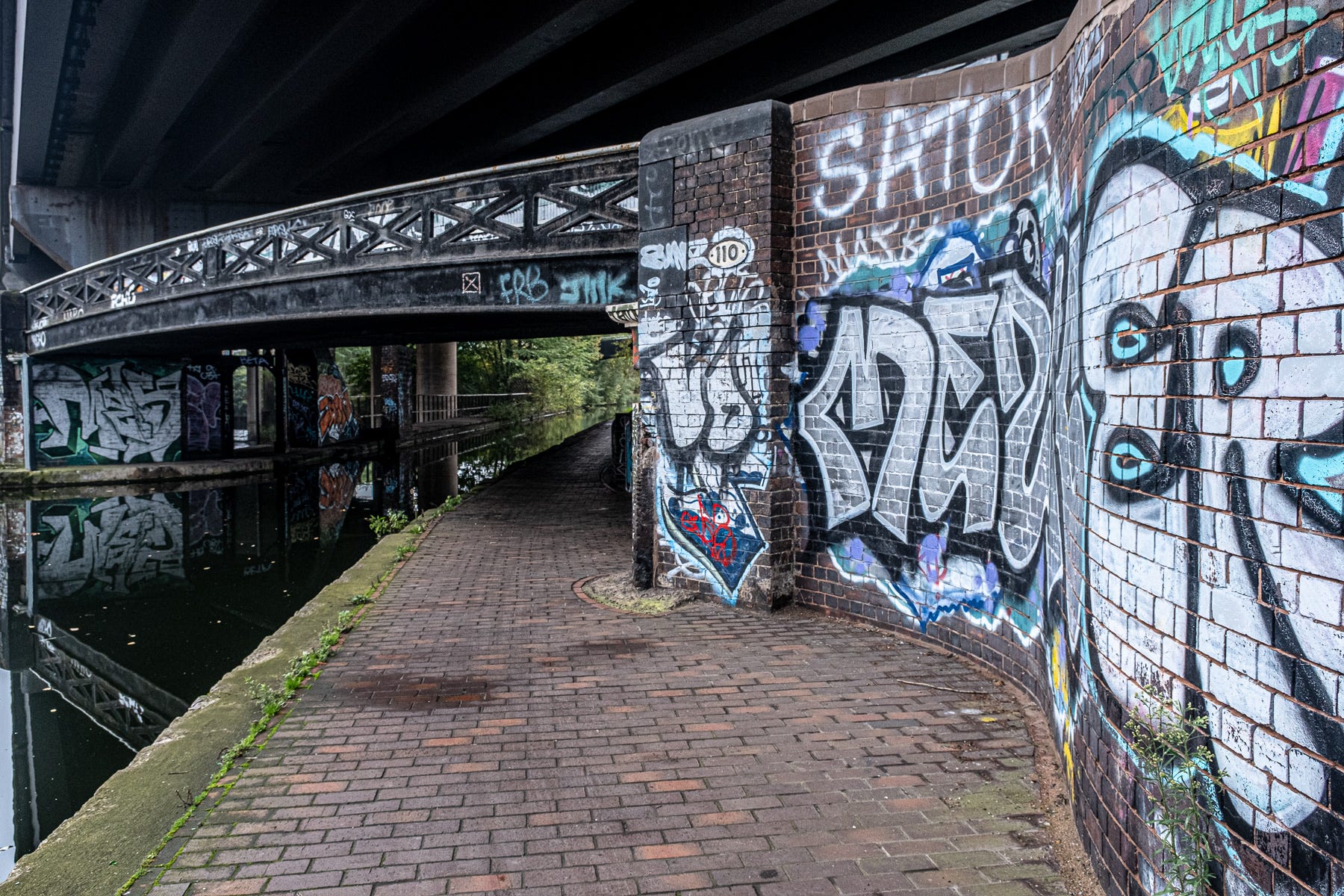
The motorway junction, designed in the 1960’s and opened in 1972 is strikingly brutal, supported by 559 massive concrete columns and spanning 30 acres. Originally designed to handle 75,000 vehicles a day, it carried only half that number when it opened. Today, however, 220,000 vehicles pass through the junction daily, with around five million tons of freight moving along it every week.
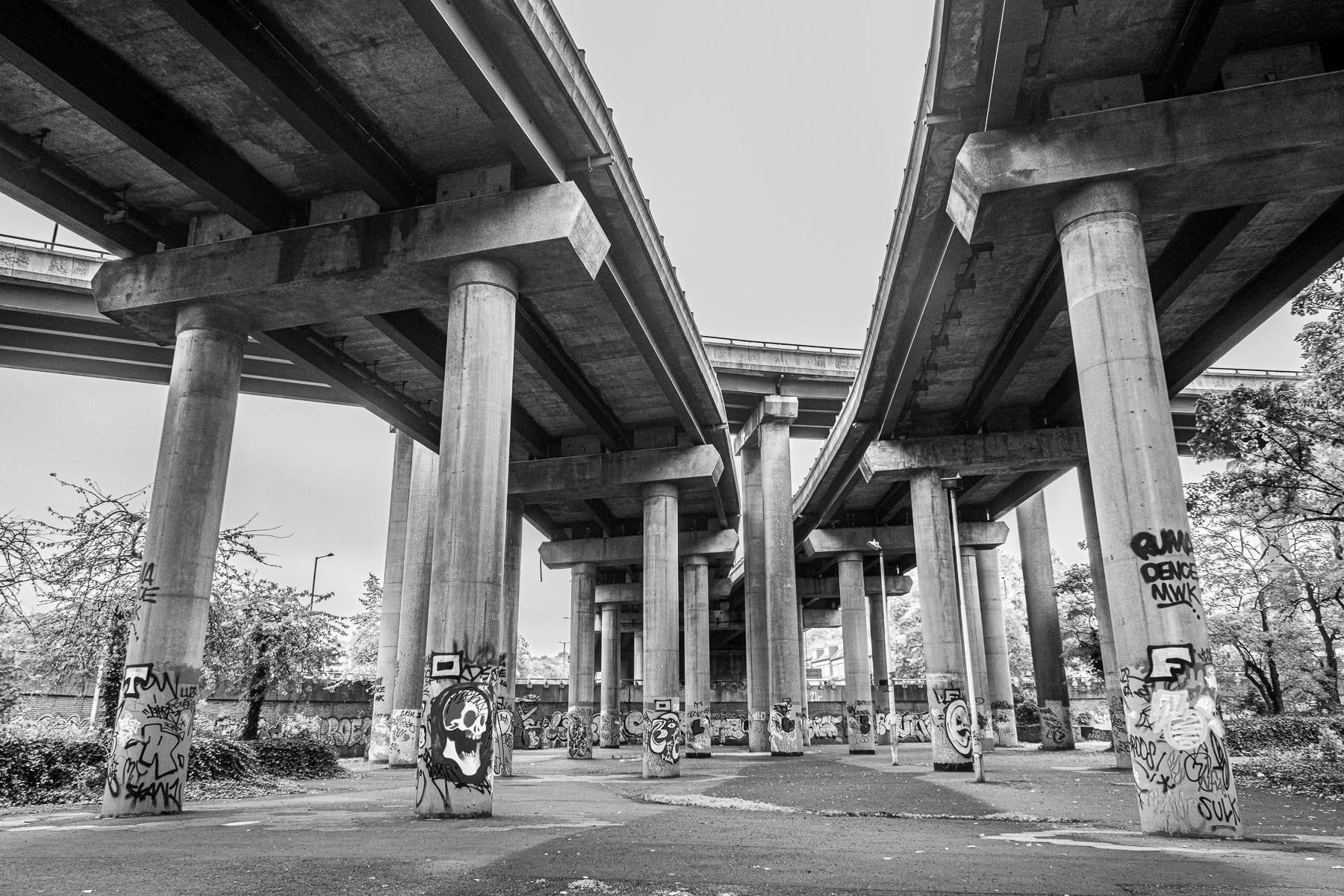
The big rumor is that the concrete contains the final resting places of Eddie Fewtrell’s enemies, particularly those who were taken down during the Battle of Snow Hill between the Aston lads and the Kray Twins’ gang of Cockney criminals. If it's made of 80% concrete and 20% gangster, it might explain why it constantly requires so much repair!
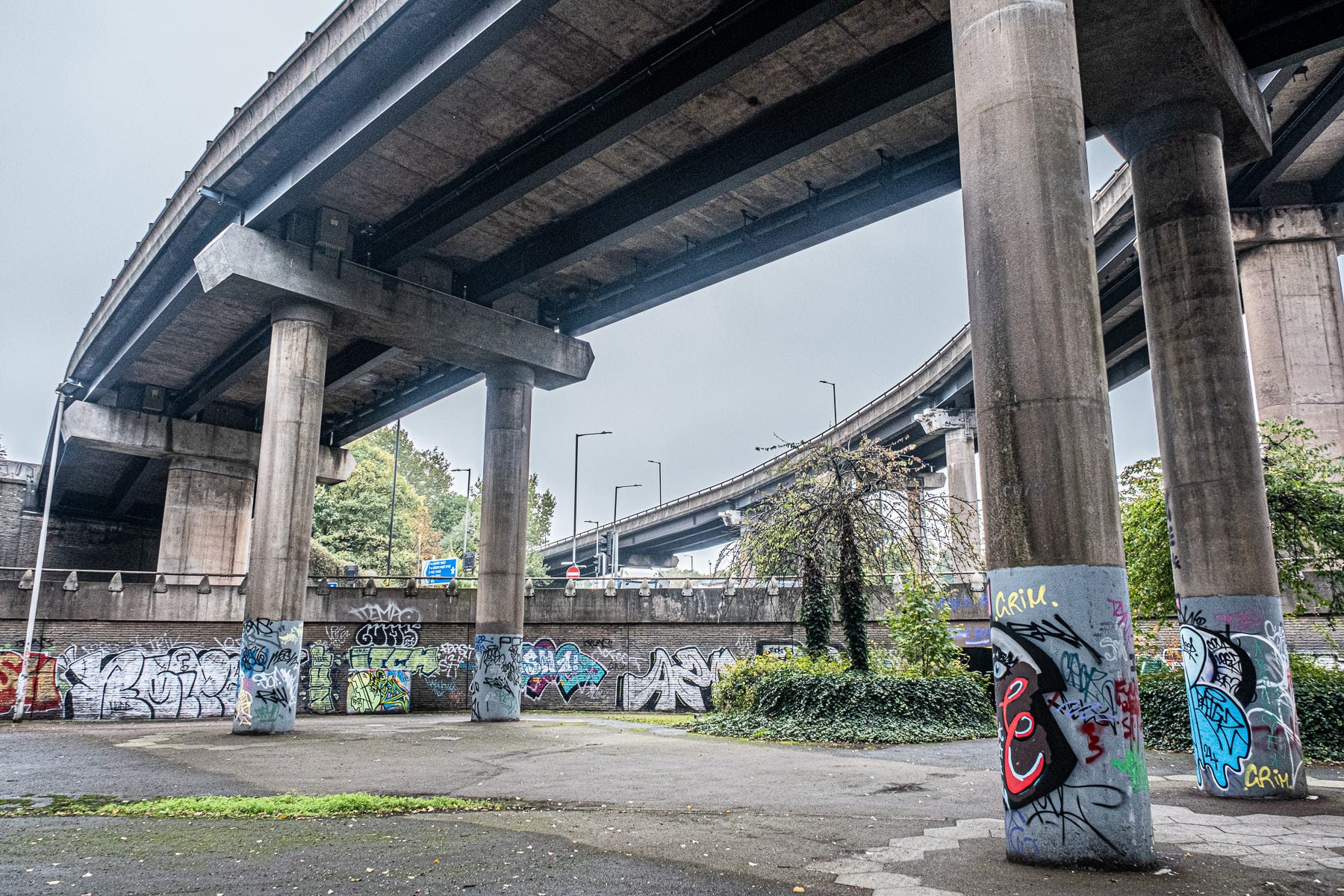
At it’s centre the inner pedestrian area of the junction is an unfriendly concrete jungle (literally) through which pedestrians can scurry, like rats, through the grimy underpasses.
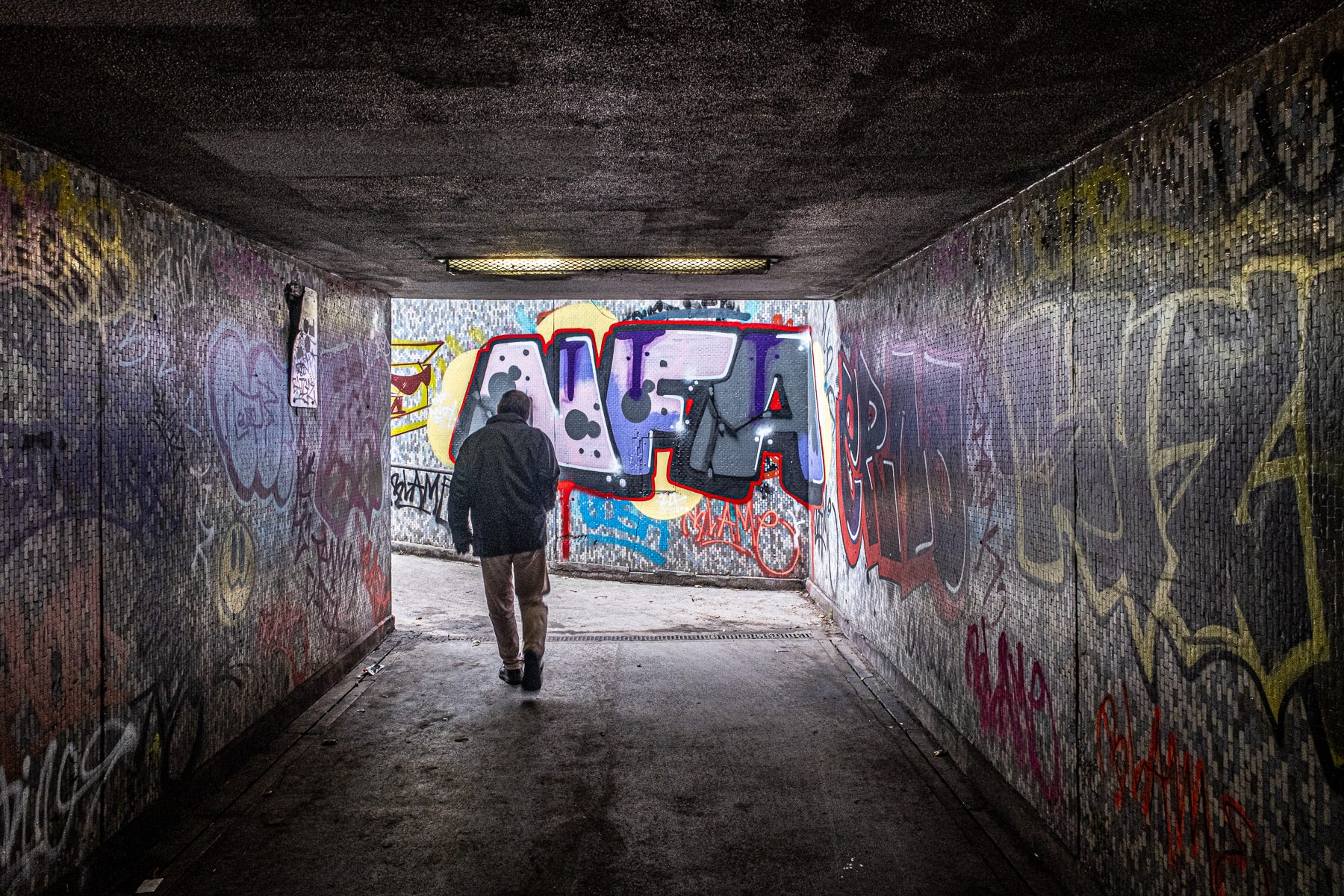
Despite its gritty and harsh nature, I appreciated seeing how young people and street artists have defied expectations, turning the once-idealistic vision of 1960s city planners—who imagined a pedestrian utopia—into a vibrant canvas. It has become a place where they can channel their talent, creativity, and frustration with a society that has largely ignored them, much like the hundreds of thousands who drive above this hidden world every day, unaware of its existence.
Think I must be your top fan John. 😂 It takes a real skill to create intrigue, poetry and a weird kind of beauty out of something so unattractive.