
Wayne's World
And other stories. A photographic essay.

I’ve been sitting on this article for a few weeks waiting for a relevent Freedom of Information Act reply. I now have it and you can see that response in the text.
DAY 1 - The week leading up to my 70th birthday marked the beginning of a project I had been contemplating for some time: to photograph and document various parts of modern Britain, while perhaps looking under a few stones. You can see some of my first tentative steps along that journey on my new photographic website www.uklife.uk
On a bright, warm September day, we set off heading northwest, first stopping in Accrington before continuing on to Blackpool for a two-night stay.
Accrington, once a proud and bustling mill town, now carries a reputation for being down at heel, with certain areas known for high crime and antisocial behaviour. However, on a bright summer's day, the town appeared quite pleasant. It was evident, though, that the prosperity it once enjoyed had faded, and money was scarce. Many shops in the town's shopping centre were closed, and like much of the UK, those that remained were a familiar mix of charity shops, vape stores, barbers, and nail salons.
In a bleak shopping centre, a security guard approached me and politely asked if he could take a look at my photos. Normally, my instinct would be to tell him to ‘feck off’, but I sensed he was genuinely interested. We ended up chatting about the empty shops, and he explained that although the rents were low, it was the high business rates that made them unsustainable.


As I wandered around an old lady saw me taking photos and came for a chat to tell me that her husband had been a keen photographer, a Hasselblad user no less.
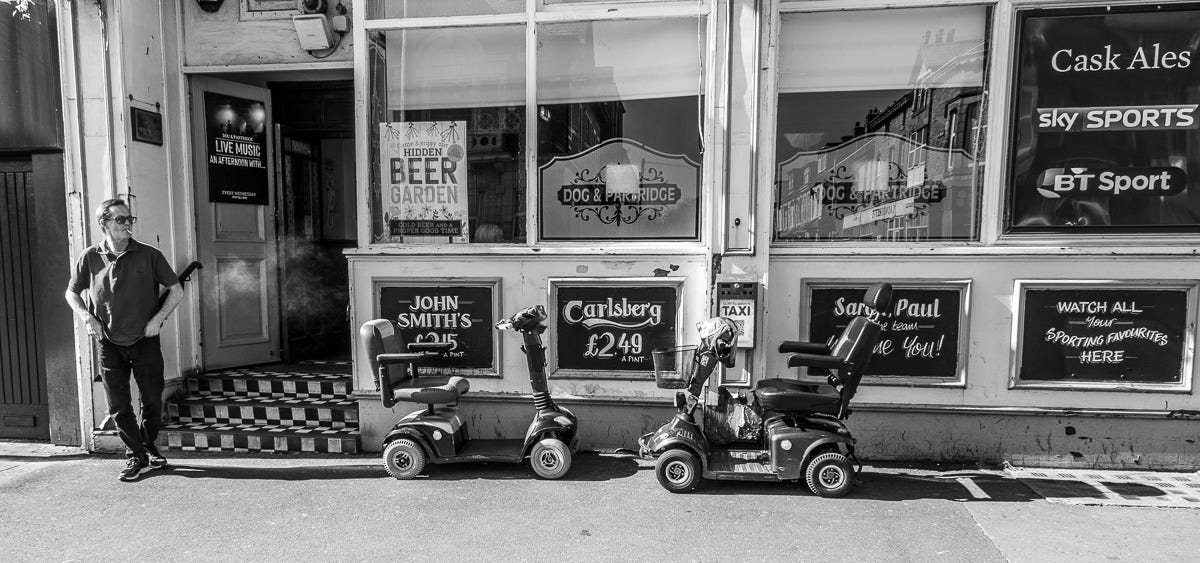
Accrington also introduced me to a number of people, that I was to see later in Blackpool, using mobility scooters. This group of presumably mobility impaired and economically inactive people could be seen in significant numbers (particularly in Blackpool). In many cases they were the morbidly obese and not all were old by any means.
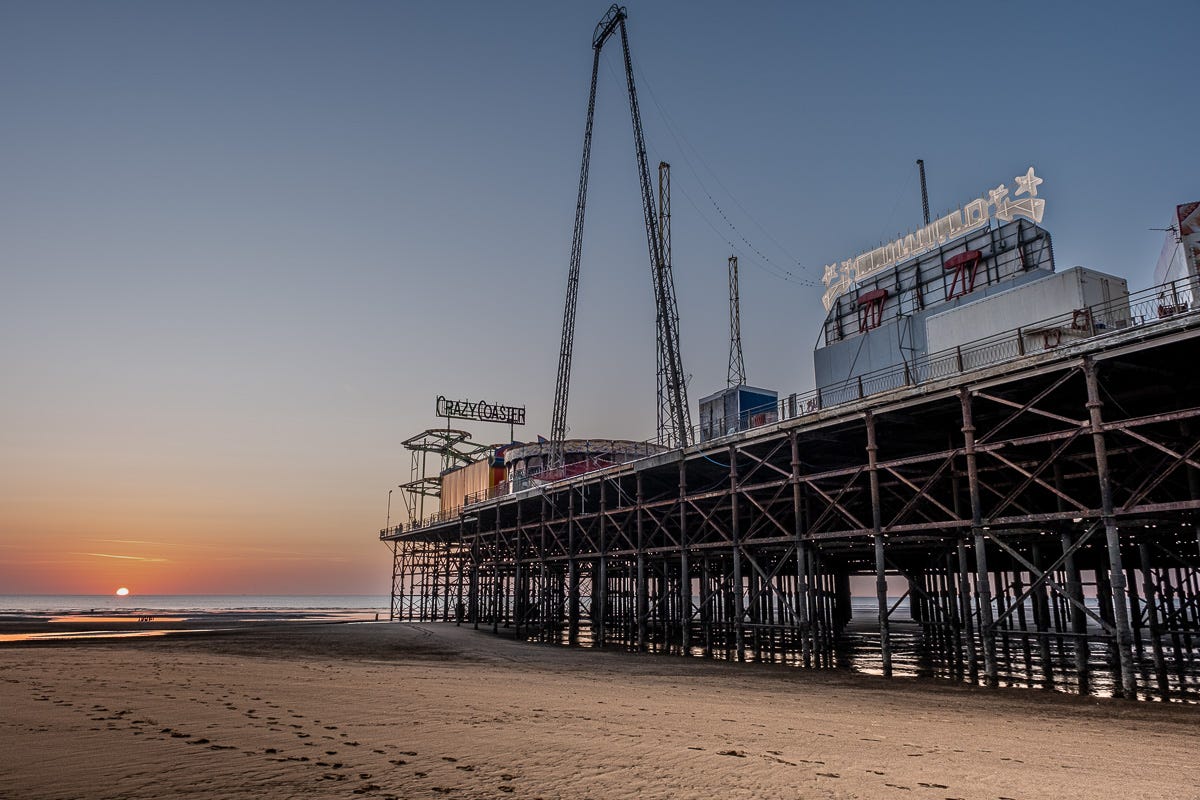
After a few hours in Accrington we drove to Blackpool where, after checking in to our accomodation, we set off to the beach and the delights of a beautiful sunset, three piers and a promenade of illuminations. The last time I had been here was 57 years ago, for my 13th birthday, when my parents brought me to watch a promising young footballer called Alan Ball play for Blackpool reserve football team. Perhaps it’s the nostalgia of childhood, but I remember being much more impressed by the illuminations back then. Then again maybe it’s just the curse of growing older where everything seems to have been better in the warm, distant glow of the past.
What struck me most, though, and as I hinted earlier, was the overwhelming number of obese and morbidly obese people. These days, it may be considered offensive to even mention such a thing, but the sheer volume of overweight people was undeniable. In marketing terms, they are no longer referred to as ‘outsize,’ the term used in women’s retail in the 1970s for anyone over a size 18. Now, the fashionable term is ‘curvy.’ But let’s be honest—many of these people are not just curvy, they’re fat, in some cases dangerously so and it’s taking a toll on their health. The strain on the N.H.S. be becoming unsustainable.
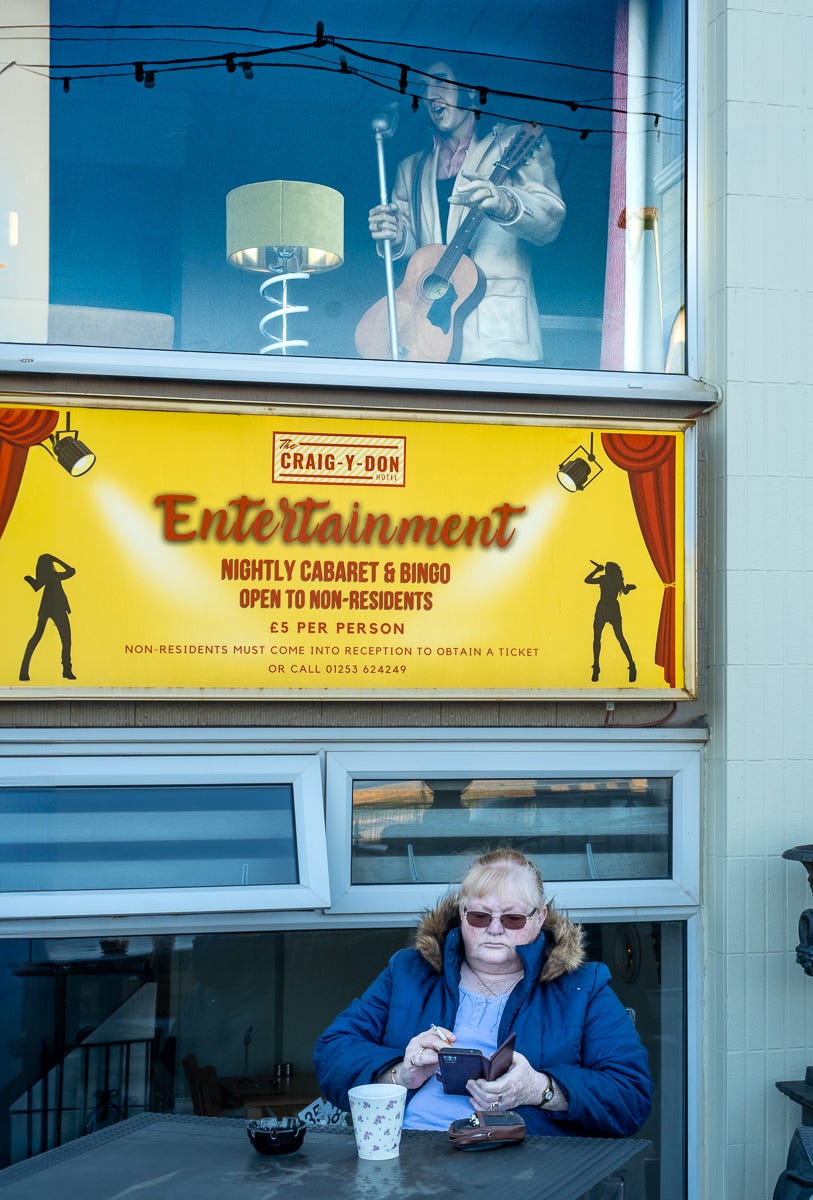
I’m sure there are plenty who will label me ‘fattist’ or worse, but that’s not my intention. I’m simply pointing out a reality that society often dances around. The reasons behind this crisis are complex—ranging from a lack of education and exercise to the breakdown of the family unit, situational unhappiness, and even the over-prescription of medications like SSRIs. Perhaps I’ll dive deeper into these factors another time, but for now, I’ll just say: go to Blackpool and see the health crisis hurtling down the tracks for yourself.
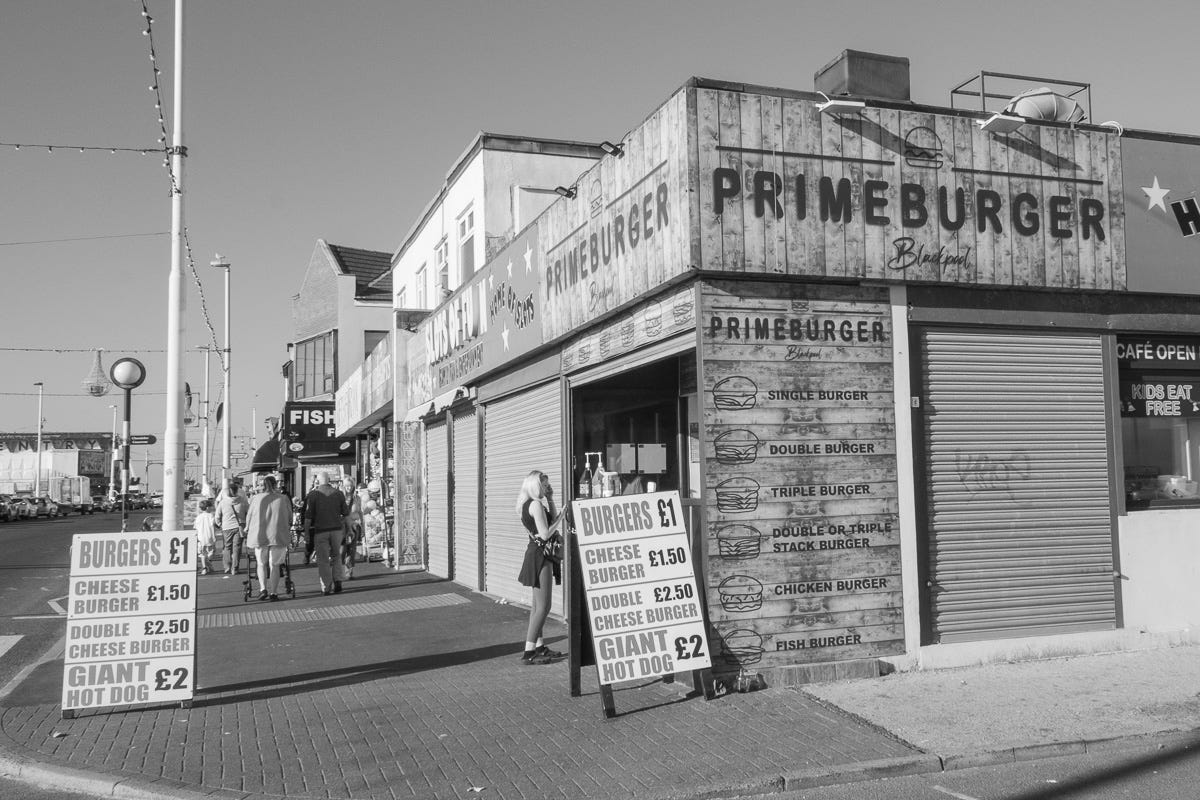
The second big issue in Blackpool is the housing issue in the UK and I stumbled across two examples of this that seemed to be diametrically at odds with each other but in realty had the same roots; the malfeasance of the British state.
As we wandered around on day two we came across a National Gallery outreach project supposedly bringing ‘art to the community’. I'm going to digress here and explain why I think that this nothing of the sort and it is just the patronisation of the ‘hoi polloi’ by the London elite. The project is called the Art Road Trip and operates in a customised vehicle with a custom number plate. Custom number plates are always a red flag to me and this is confirmed when reading their website written in first class ‘justfy-ourexistence-ease’ (the language of those who make their living pilfering grants from the tax payer). I quote from their website
”In Blackpool, we're partnering with local arts organisation LeftCoast. LeftCoast delivers highly engaging and socially useful arts and cultural projects in Blackpool. They facilitate connections between artists and residents by co-creating artworks and projects that elevate local voices, encourage exploration and play, and make a difference on personal and community levels.
Over two weeks, Art Road Trip’s travelling studio is visiting nine Blackpool locations, working with local artists Nerissa Cargill Thompson, Joseph Doubtfire and Lizza Lane to host a series of drop-in and hands-on activities inspired by the flower paintings of Dutch painter Rachel Ruysch from the National Gallery Collection and get us thinking about how plants, growth and creativity shape our daily lives.
Tying into LeftCoast’s Right To Grow Manifesto and its exploration of ‘what it means to live a creative life,’ people can explore a botanical lab filled with handmade specimens, craft their own faux terrariums, create virtual floral artworks, and make symbolic floral arrangements that tell their own stories, plus much more. “
The Director of the organisation ‘trousers’ a remuneration package of nearly £300K a year. I made a Freedom of Information request to find out how much this Art Road Trip costs us taxpayers. Here is their response
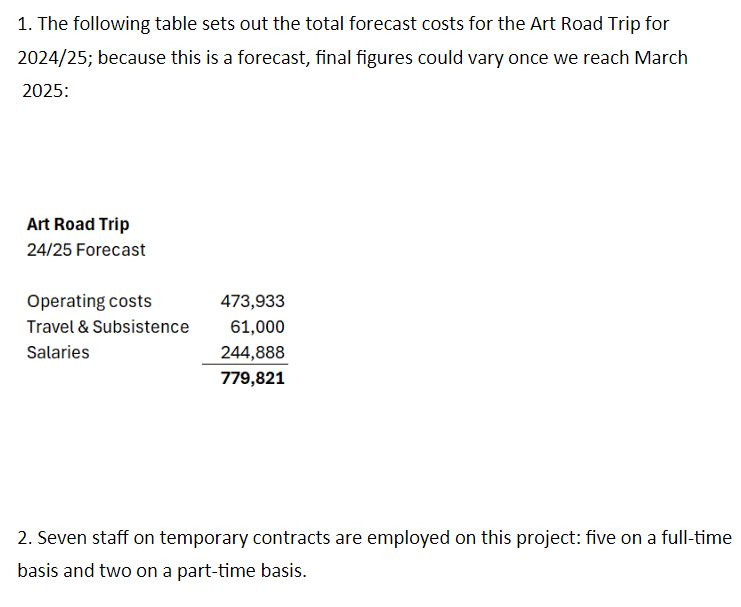
Yes, dear reader, this little activity of arranging flowers, colouring in, and rolling plasticine comes at a staggering cost of three-quarters of a million pounds a year. Keep that in mind as you read Wayne’s story below.
The van and artists were stationed on a derelict site that had once been a pub before its demolition. This unremarkable patch of wasteland was near the former stables that housed Blackpool’s famous beach donkeys. The area was now home to a diverse mix of people, with a notable number of Romanians living nearby. In a tongue-in-cheek moment, I suggested painting a donkey mural on the blank gable wall. The idea was met with enthusiasm, and they’re even going to consider it, no doubt as long as they can dip into the public coffers once again!
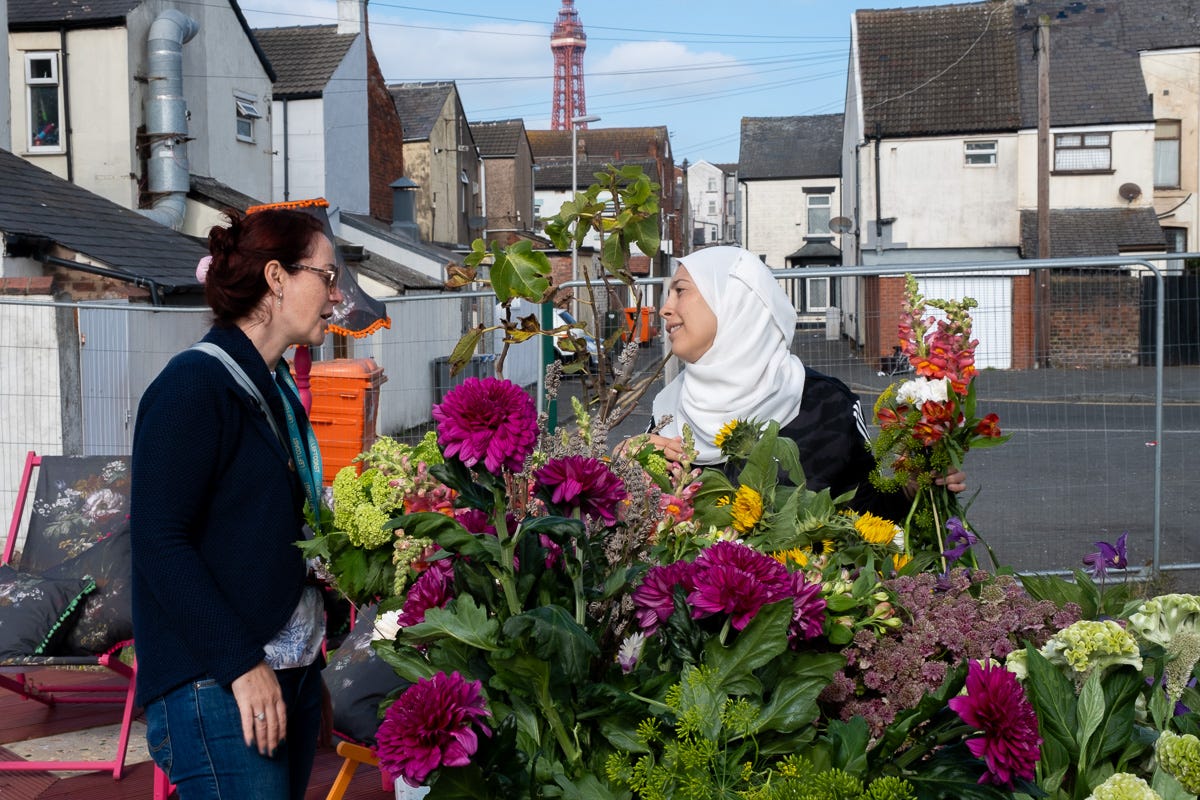
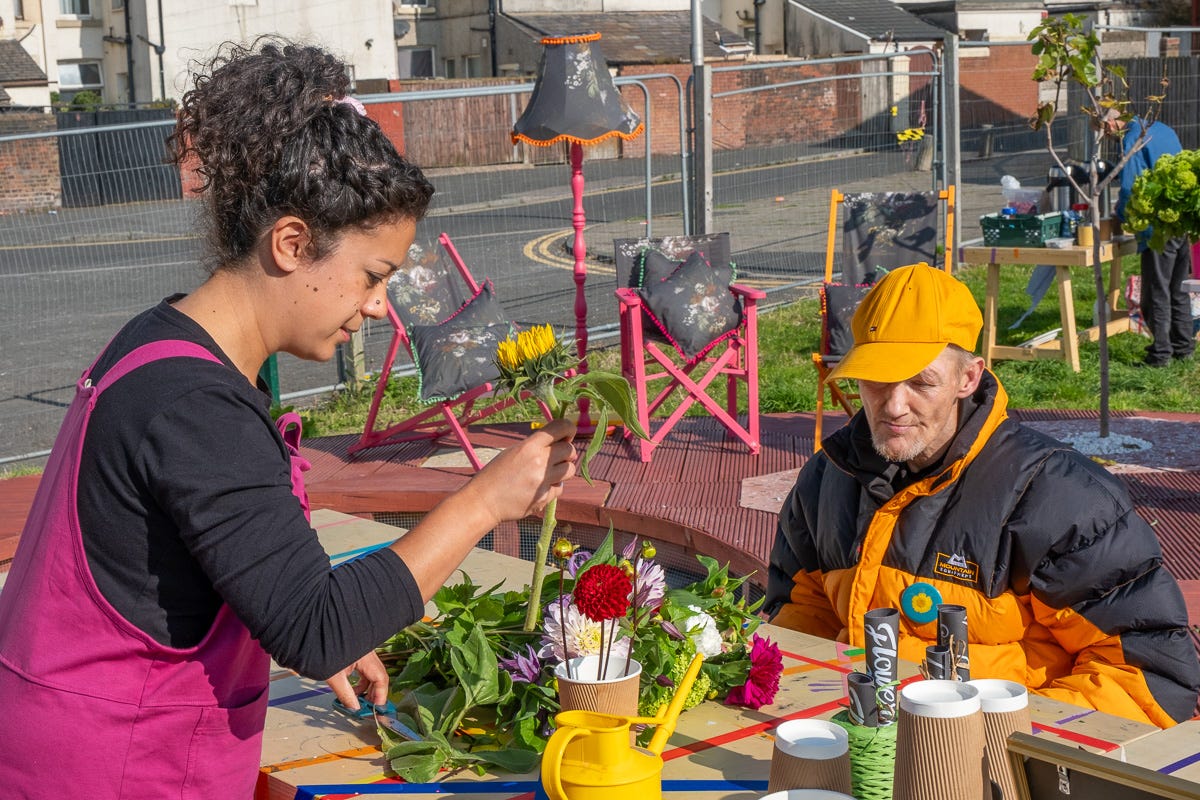
The "art installation" featured a raised platform, reportedly created with the help of local residents. It included a few prop deck chairs, a standard lamp, and some artist easels where participants could color in flower drawings. There was also a badge-making machine, some plasticine for modeling, and flowers for crafting small artistic posies. That was the extent of it. While there, we met a Syrian woman with her young children. They had been temporarily housed in Blackpool while seeking asylum in the UK and were awaiting a decision on their application. She had previously been teaching English in Dubai; both she and her children spoke excellent English.
On our second day in Blackpool, we took the tram to Fleetwood. The ferry across the estuary was still in operation, but there was no trace left of the once-thriving fishing industry. It was a pleasant, sunny day, but I could imagine how harsh it must be for most of the year, with the wind and rain driving in from the west.
Back in Blackpool, we encountered Wayne. He was sitting on the main promenade, just in front of Blackpool Sealife, begging. I decided to sit next to him and listen to his story. The first thing I noticed was how, once you're seated on the pavement, you become invisible to the crowd. No one dares to make eye contact, too uncomfortable to acknowledge you.
Our conversation, in brief, went like this:
Me: Hi, do you mind if I sit and chat?
Wayne: No, that’s fine.
Me: I bet you feel invisible here?
Wayne: Yes.
Me: If you don’t mind me asking, how did you end up here?
Wayne: I used to drink a lot. My relationship fell apart, and since I’m originally from Blackpool, I came back.
Me: Do you still drink?
Wayne: No, I don’t touch it anymore.
Me: What about weed? I hear there’s a lot of that around Blackpool.
Wayne: No, I don’t do drugs either.
Me: Do you have a place to stay? A hostel, maybe?
Wayne: No. The council won’t help me until I’ve been here six months. So, I live on the street. It’s hard, man. I’m not trying to be racist, but illegal immigrants get help, housing… I get nothing, and I’m British. Winter’s coming, and it’s cold. Most people steal to get by, but I won’t do that.
Me: What skills do you have? What kind of work did you do?
Wayne: I’m a qualified plasterer and have some bricklaying experience, but without an address or tools, no one will hire me.
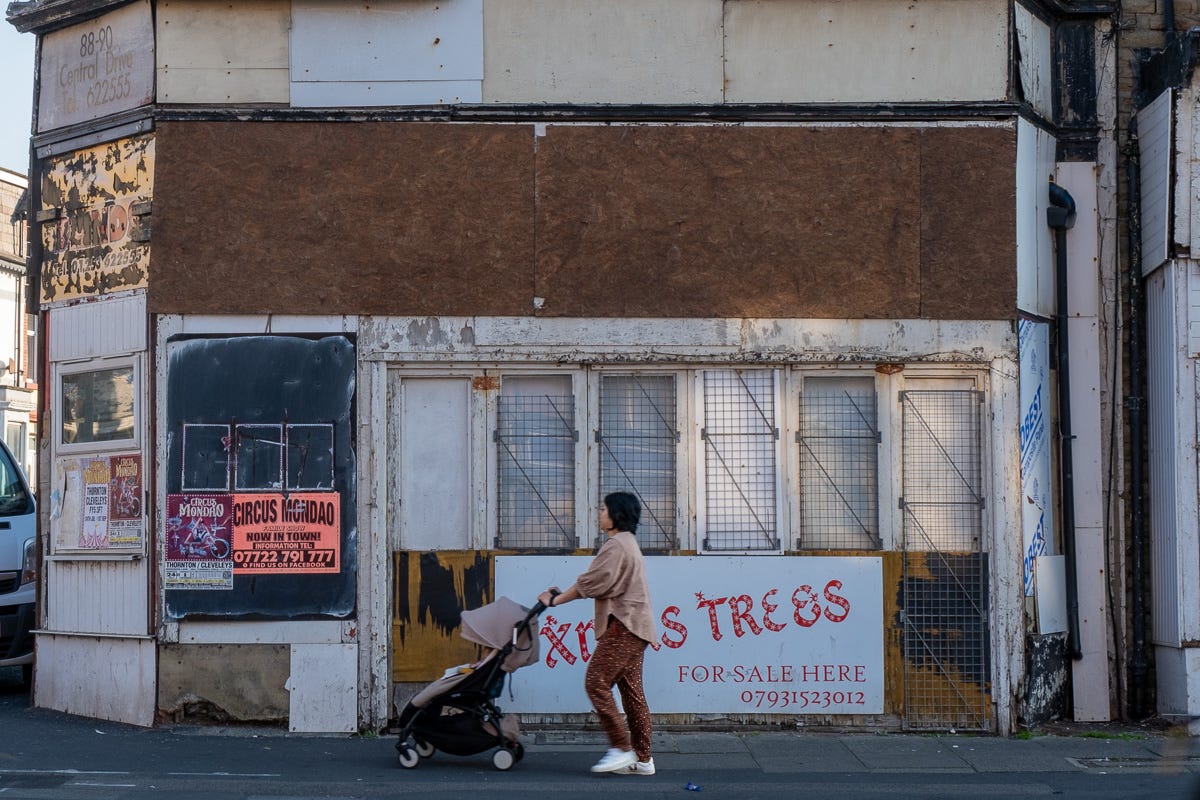
We continued talking about the challenges of the building industry, how there’s a shortage of workers, and yet Wayne, despite his skills, couldn’t find a job. Meanwhile, derelict, unused buildings were scattered all over Blackpool. It’s the paradox of modern Britain. I mentioned that I was turning 70 the next day, and Wayne told me he had just turned 44 the day before.
After 15 minutes or so I suspected that I might be cramping his begging opportunities so I thanked him and gave him some money. He stood up and shook our hands clearly grateful that another human being had spent some time with him.
Next time you see someone on the streets perhaps have a chat with them, it might be beneficial to you and them?
DAY 3 saw us heading on to Liverpool and you can read something about that here
Dear John, I really enjoyed reading this post and there is no doubt in my mind that the world would be a better place with more people like you living in it. Truly a brother in arms as in Dire straits.